
Medicare
Turning 65 or New to Medicare?
You’re in the right place.
Medicare can feel confusing at first. There are different parts, deadlines, penalties, and plan options — and the mail you receive doesn’t make it any easier.
My job is to simplify it for you. Let’s start with the basics.
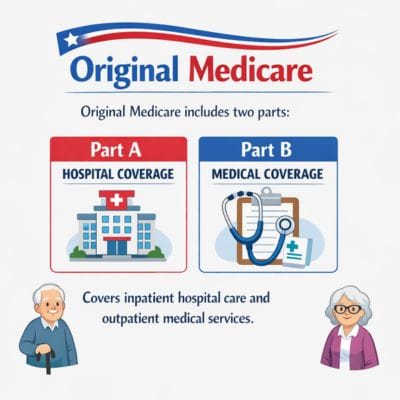
Original Medicare
Original Medicare is made up of different “parts”:
Part A – Hospital Coverage
Covers hospital stays, skilled nursing, and some home health care.
Part B – Medical Coverage
Covers doctor visits, outpatient care, preventive services, and medical equipment.
Part D – Prescription Drug Coverage
Helps cover the cost of medications.
Original Medicare does not include Part D. You have to sign up for it seperately with a Medicare insurance carrier. You don't want to neglect this as there is a penalty for not signing up with your eligibility.
Medicare Advantage (Part C)
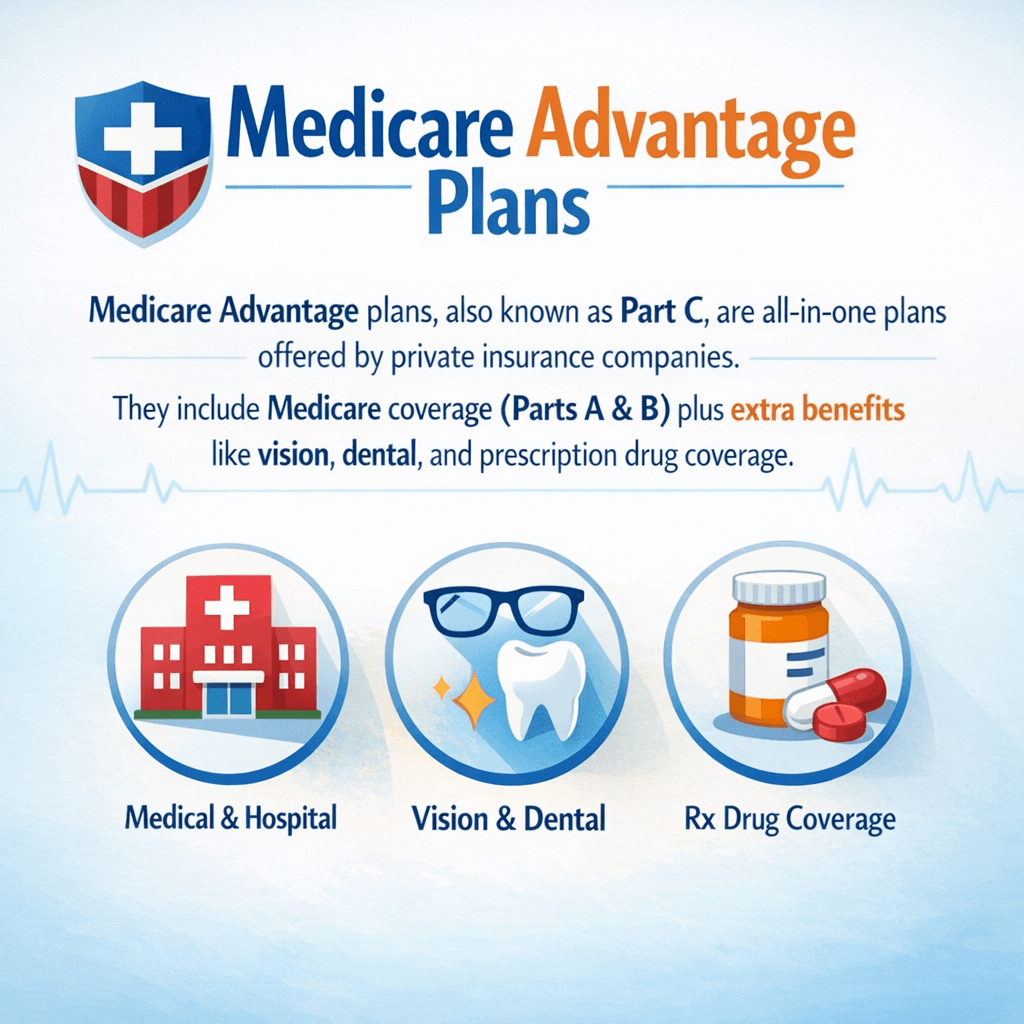
Medicare Advantage is an alternative to Original Medicare that bundles hospital, medical, and often prescription coverage into one plan.
Medicare Advanatage plans are most popular choice for beneficiares. Many Advantage plans have low or no extra premium to be in the plan.
Plans often bundle Part A, Part B, and Part D (prescription drugs) into one plan.
Plans must have an annual out-of-pocket maximum, providing a financial safety net.
Many offer extras not covered by Original Medicare, such as dental, vision, hearing, and gym memberships.
Unlike traditional Medicare, these plans often restrict coverage to specific networks of doctors and hospitals, often requiring prior authorization for services.
UnitedHealth Group and Humana account for nearly half of all Medicare Advantage enrollees nationwide.
Medicare Supplement (Medigap)
With Medicare supplements, studies show 93% of beneficiaries are satisfied with their coverage.
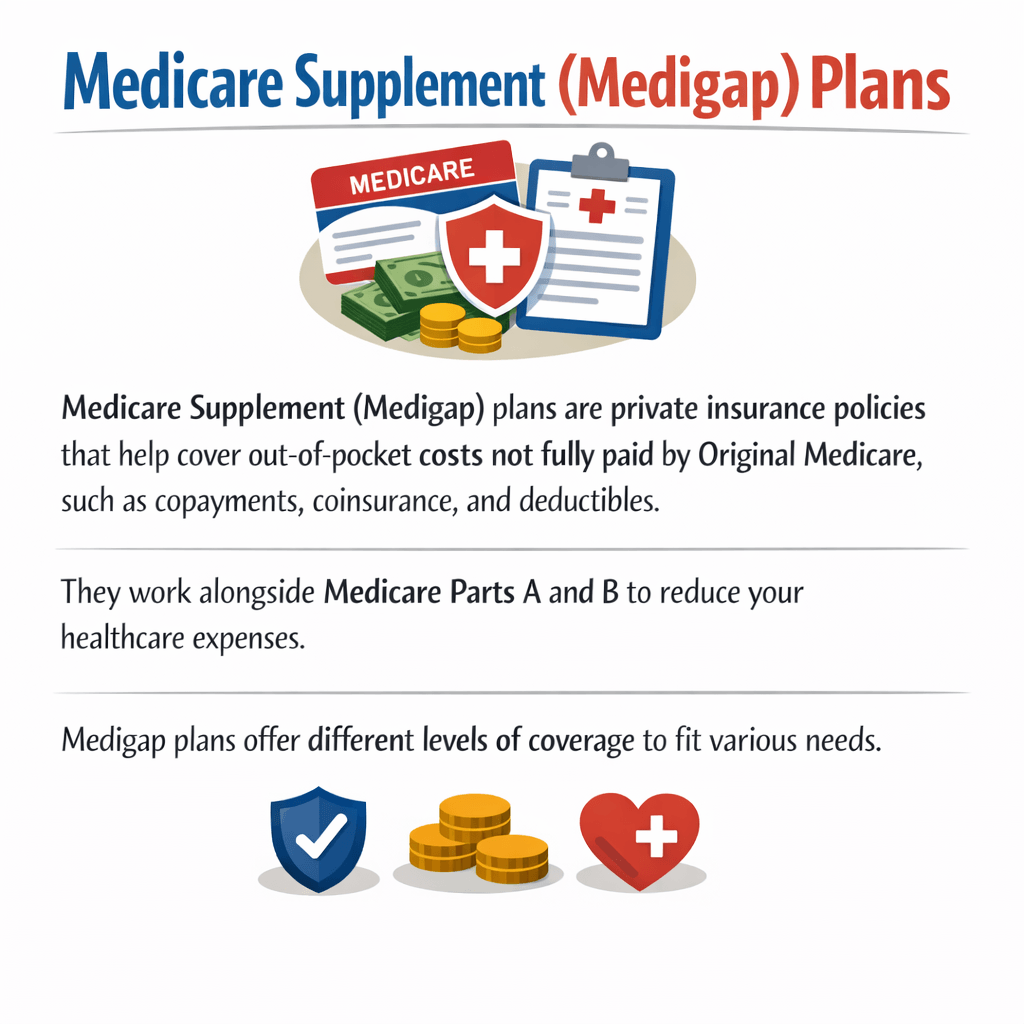
They cover most, if not all, out-of-pocket expenses (like deductibles and 20% coinsurance) not covered by Original Medicare, making budgeting easier.
While out-of-pocket costs are low, monthly premiums can be high compared to Medicare Advantage plans.
They cover most, if not all, out-of-pocket expenses (like deductibles and 20% coinsurance) not covered by Original Medicare, making budgeting easier.
Beneficiaries appreciate not having to deal with prior authorizations or network limitations.
Generally, these plans do not include dental, vision, or hearing coverage.
It is best to purchase during the 6-month Open Enrollment period; otherwise, you might undergo medical underwriting and could be denied or charged more.
How Do You Sign Up For Medicare?
If you’re turning 65, you typically have a 7-month window to enroll:
3 months before your birthday month
The month of your birthday
3 months after your birthday month
You can enroll in Medicare through the Social Security Administration.
Ways to Sign Up:
Online:
Visit the official Social Security website:
https://www.ssa.gov/medicare
By Phone:
Call Social Security at:
1-800-772-1213
(TTY: 1-800-325-0778)
Hours are generally Monday–Friday, 8:00 a.m. to 7:00 p.m.
In Person:
You can schedule an appointment at your local Social Security office.
If you’re already collecting Social Security benefits before 65, you may be automatically enrolled in Parts A and B.
What Happens After You Enroll?
Once you’re enrolled in Medicare Parts A and B, you’ll need to decide:
1. Do you want a Medicare Supplement + Drug Plan?
OR
2. A Medicare Advantage plan?
This decision affects your costs, network access, and coverage structure.
And this is where having guidance matters.
How I Can Help
As an independent Medicare advisor:
✔ I compare plans from multiple companies
✔ I check your doctors and prescriptions
✔ I explain costs clearly
✔ I help you avoid penalties
✔ I stay with you for annual reviews
There is no cost for my services.
My goal is simple: help you feel confident — not confused.
Let’s Make Medicare Easy
If you’re turning 65 or reviewing your current coverage, let’s talk. Schedule a free consultation and we’ll walk through everything step-by-step.
You don’t have to figure this out alone.
CALL 407.603.1913